You see the word “bungalow” in two different listings on the same night and decide to look into it. One is in Kent, the other is in Portland, Oregon. You see photographs of two very different structures. You wonder what the definition of bungalow is. It’s a dwelling that has a single storey of inhabitable space, sometimes with a half storey in a sloping roof, usually with a low, pitch roof that has wide eaves that cover the front of the house. The definition on either side of the pond is very different, but more on that later.
Almost all of the pages ranking for this question describe the bungalow as a rigid structure. It’s better understood as a word that has floated across the sea from Bengal, made stops along the British seaside, and eventually landed in the American suburbs. The float is still confusing buyers. Below is the definition, etymology, the path it took, the transatlantic divide, the ranch house comparison, and of course, the money.
1. The definition: one storey, plus whatever the roof holds
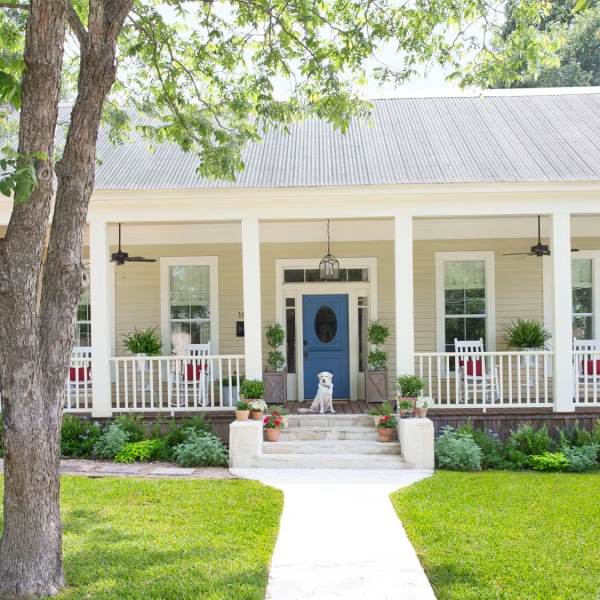
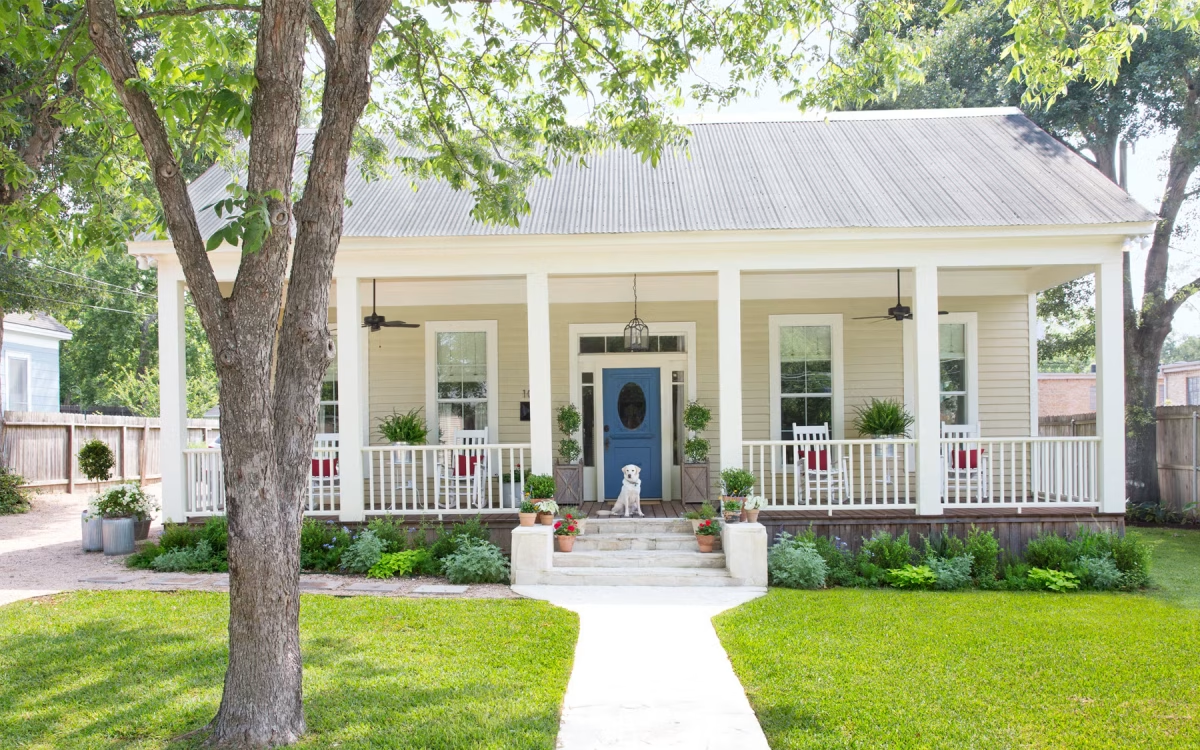
A bungalow is one storey of living space with a low, pitched roof that has eaves that overhang the sides of the structure. Sometimes there is a half storey in the roof and is accessed by a short set of stairs, lit by a dormer window. A full second storey makes it a house, not a bungalow.
What features make a building a bungalow? Features like wide eaves and exposed rafters, dormers, and covered front porches or verandas come to mind, along with natural materials. A flow to the floor plan, rather than a boxed off corridor to divide living spaces, adds to the bungalow feel. Wikipedia’s architectural summary defines a bungalow as a small house or cottage, typically single- or one-and-a-half-storey, with wide verandas and windows protruding from the roof where a smaller upper floor exists.
Is a bungalow one storey or two?
One. Plus the roof, if the roof has been made habitable. That is the whole rule, and it is the part listings get loose with.
How many bedrooms does a bungalow have?
Size does vary. Most sit between 800 and 2,000 sq ft, which is typically 2–3 bedrooms and 1–2 bathrooms. Comfortable for a couple or small family. Rarely do bungalows have more.
2. Why is it called a bungalow? Bengal, by way of the East India Company
The word has its origin in India, not England. It is a borrowing from Hindi banglā, from Hindi, Marathi or Gujarati bangla, meaning “of or belonging to Bengal” — a house built in the style of the houses of the Bengal region of India.
The Oxford English Dictionary puts the earliest English evidence at 1676, in a diary entry by S. Master, with the now-standard spelling first recorded in 1784. The word came in through the East India Company: English sailors and company men used it for the temporary single-storey thatched houses they made for themselves in India.
Although it started as sailor slang, the word travelled a long way from a sailor’s hut while keeping its one rule. The spacious official residences of the Lutyens’ Bungalow Zone in New Delhi are bungalows, too, in the technical sense of the word — single-storey, however grand.
3. Bengal to Britain: the seaside holiday cottage, 1869 onward
The first English bungalow was built in 1869. The first two were built in Westgate-on-Sea, Kent, in 1869 and 1870. By the 1870s the bungalow had become a popular design for fashionable seaside holiday cottages.
Then it scaled. Britain built bungalows in volume between the two World Wars, which is why so much of the UK’s single-storey stock carries an interwar date. The British reading of the word was fixed in that period: a structural fact about floors, not a style.
4. Britain to America: Arts and Crafts, Sears, and 80,000 Chicago bungalows
America took the same word and attached it to a style. Between 1900 and 1918, US bungalows peaked, with the Arts and Crafts movement carrying them — which is why bungalows and the Craftsman style, with its exposed joinery, built-ins and honest materials, were practically interchangeable in America.
The ‘Sears Modern Homes’ programme (1908–1940) turned it into a product: mail-order kit houses shipped by rail with pre-cut lumber. Unsurprisingly, whole American streets boast the same handful of bungalow plans.
For a concrete picture, take Chicago. The Historic Chicago Bungalow Association accounts for more than 80,000 bungalows in the city, representing about a third of Chicago’s single family housing stock, and spread over a C-shaped swath of land on the northwest and south sides. Built between 1910 and 1940, Chicago bungalows feature brick construction with limestone accents, generous windows, a low-pitched, overhanging roof, a long, rectangular plan, and a full attic and basement.
The variants you will see in listings: California, Chicago, chalet, raised and bungaloft
In listings expect to see California, Chicago, chalet, raised and bungaloft styles. The California bungalow and the Chicago bungalow are regional types. The chalet bungalow and bungaloft put living space in the roof. The raised bungalow lifts the whole thing over a usable basement. Spanish/Mission, Prairie and Tudor detailing are dressings applied to the same basic box — listing agents throw these terms around interchangeably with “bungalow” and expect you to follow.
5. The transatlantic split: what is a bungalow in the UK versus the US?
This item is left out of all ranking pages, and costs readers time. In the UK, the word ‘bungalow’ describes a construction type. Any single storey dwelling is a bungalow. An upper storey built into a sloped roof can exist on a bungalow, but as Designing Buildings Wiki notes, it is an exception to the norm, and nobody expects a particular architectural style. In the US, the word refers to a style of architecture. A bungalow is often a Craftsman style home with Arts and Crafts detailing, a sloping roof and a half-storey.
The practical consequence shows up the moment you compare listings. American readers will often refer to a British bungalow as a ranch house or single storey home. Thus, a US listing and a UK listing can call a dwelling a bungalow and mean two different things. No page ranking for definition of bungalow gives a way for readers to resolve this.
Why the bungalow has almost stopped being built
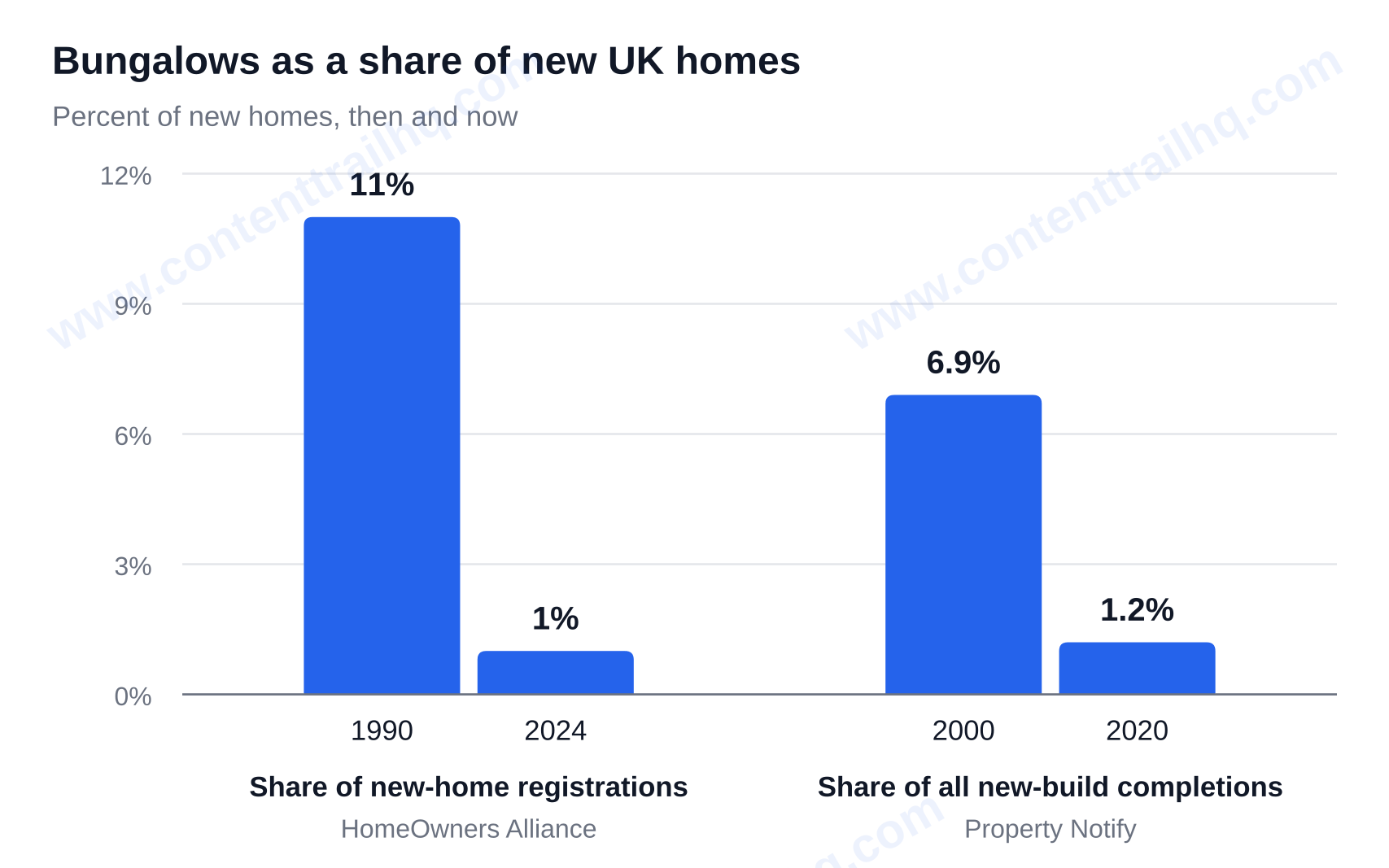
The second half of the drift is supply. Most of the explainers describe the bungalow’s popularity in the past without stating the fact that bungalow construction has almost completely stopped. HomeOwners Alliance figures show bungalows fell from 11% of UK new-home registrations in 1990 to just 1% in 2024. Property Notify records new-build completions dropping from 9,347 in 2000 (6.9% of all completions) to 1,833 in 2020 (1.2%), and puts England’s stock at roughly 1.8 million bungalows out of 23.74 million dwellings as of 2021–7.6%.
By 2026, asking what a bungalow is will not be about determining what you can order new. Rather, it’ll be about examining existing housing stock.
6. Bungalow vs ranch house: the comparison on one page
A comparison is surfacing on the SERP, but only on different “bungalow vs ranch” pages the definition searcher never reaches. Here it is on the four axes on which sources express genuine differences of opinion.
| Axis | Bungalow | Ranch house |
|---|---|---|
| Roof pitch | Steeper, often carries a dormer | Low-pitched, long and shallow |
| Footprint | Compact, street-facing, porch to the road | Sprawls sideways across the lot |
| Era and movement | Mainly 1905–1935, Arts and Crafts | Post-war, informal, deliberately minimal |
| Ornament | Exposed rafters, porch columns, decorative detail | Clean lines, larger windows, higher ceilings |
The one-line summary: both are of a single storey, but a bungalow is a style with a period and a ranch is a layout.
7. The real advantages — and they are not the ones usually listed
No stairs whatsoever is the main argument. From that standpoint alone, a bungalow is the obvious choice for those with mobility issues, or for those planning to stay put for the rest of their lives.
Two other advantages of bungalows that are not usually mentioned are that, being all on one storey, there is more privacy, since people can’t look down on you from an upper window; and, aspects of the outside of the house that are high on a normal house are still fairly low on a bungalow and can be reached from a short ladder rather than scaffolding. Gutters, paintwork and roof edges all stay reachable.
8. The price premium: why are bungalows so expensive?
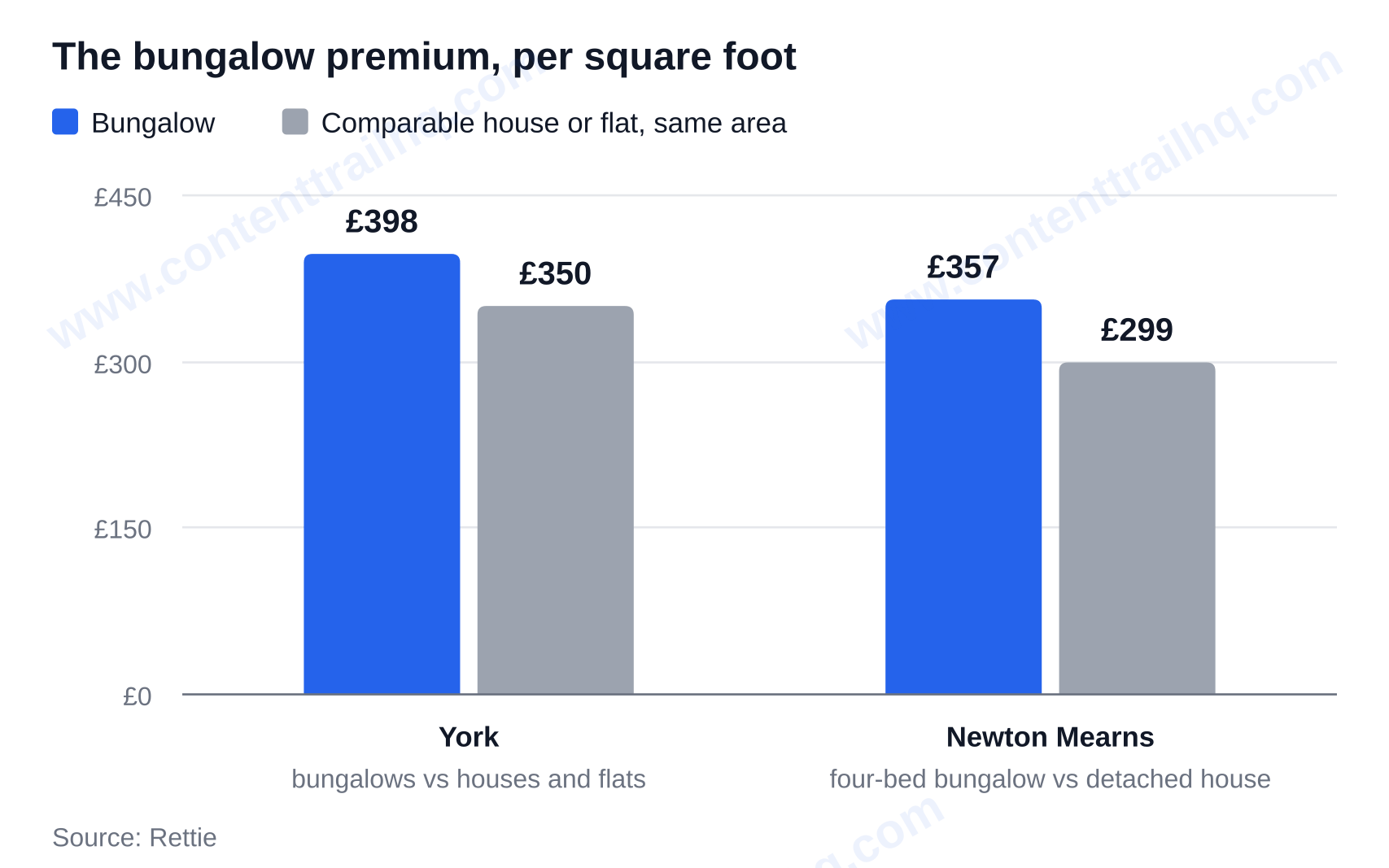
Many “explainers” called bungalows “affordable” with no numbers to back that up, and the numbers paint the other picture. A bungalow in a given area will typically cost roughly 10–20% more per square foot than an equivalent house in that same area.
Rettie report York bungalows averaging £398/sq ft, against £350/sq ft for houses and flats, and a four-bed bungalow in Newton Mearns reaching about £357/sq ft against a comparable detached house at £299/sq ft. Property Notify reports the average England bungalow price at £338,769 in October 2023.
There are structural, not fashion, reasons. A single storey requires a bigger plot for the same floor area, and can’t capture the savings of stacking rooms over one foundation and one roof. You pay for land and for roof area per square foot of living space. The other limits follow from the same geometry: a larger footprint for less internal space, and little room to expand without eating the garden or going up into the roof.
9. Who buys them — and the supply problem that beats suitability
Downsizers, retirees, buyers with mobility needs, and first-time buyers after a small freehold. Standard advice stops there and that’s where it fails, because the constraint for the majority of these buyers isn’t suitability, it’s availability.
Research by HomeOwners Alliance reports that, in the last two years, around 1.2 million UK homeowners aged 55+ — one in seven, 14% of that group — have put their moving plans on hold, with 34% of over-55s citing a lack of suitable homes, against 27% of homeowners overall. Conversely, 38% of over-55s name a bungalow as their preferred next home. Demand is high, but the pipeline is 1%.
New builds are increasingly impossible to find. In the meantime, shopping existing stock is the best option, and considering chalet bungalows, bungalofts and raised bungalows as legitimate options rather than holding out for a new-build that is not coming.
The single best way to use all this
Take one thing from the list: a bungalow is a single storey house, but which single storey house varies based on who wrote the listing. In Britain, the word describes the structure. In the US, it describes a style with a date range and a movement behind it. According to both descriptions, with new bungalows down to 1% of UK registrations, the majority of bungalows you can buy were built decades ago.
If you are considering a bungalow, make sure to get the details before you view anything. Ask for the number of habitable storeys, and check for a roof storey and stair to it. The floor plan should give you an idea of the internal square footage, and that number compared to two-storey houses on the same street will inform the price per square foot you are actually deciding on. There’s plenty more to dig into on Content Trail HQ.
Common Questions
What is the difference between a bungalow and a cottage?
Bungalows and cottages can differ in multiple ways. The most obvious is the way the storeys are arranged. Bungalows are described as having one storey of habitable space, sometimes with a half-storey in the roof. Cottages are described by character and scale rather than layout: small houses, often older, either rural or village, which may well have a full second storey. A bungalow can certainly read as a cottage, but a two-storey cottage can’t be described as a bungalow.
Can you add a second storey to a bungalow?
A single-storey form traditionally constrains the expansion of a bungalow, and the usual course of expansion is into the roof rather than on top of it. This is a bungaloft or chalet bungalow. Keeping the form of the original bungalow with a dormer means the bungalow is still a bungalow; a full second storey makes the form a house. Prior to structural changes and expansion, a surveyor and local planning advice should be consulted before you budget for it.
Do bungalows cost more to heat than two-storey houses?
A bungalow has a larger roof and more ground-floor slab per square foot of living space than a house that stacks the same floor area over one footprint. This results in more external surface area losing heat. How much that costs you depends entirely on insulation, glazing and age. Since the majority of bungalows in the UK are decades old, the condition of the specific property is going to be more important than the form itself. Ask to see the EPC.
What is a chalet bungalow?
A chalet bungalow is a bungalow that has habitable rooms built into its sloping roof, reached by a short stair and usually lit by a dormer window. A bungaloft is the same idea. For a downsizer, or a buyer with mobility needs, these should definitely be considered as genuine options rather than compromises. Plus, with new bungalow registrations at 1% in 2024, roof-storey variants substantially widen what is actually available to view.